


 中文简体
If you have ever walked an excavator off a paved road and into a soft field, you already understand what rubber track pads are for. Steel tracks bite the ground, but they also chew up asphalt, wake up the neighborhood, and leave an operator shaken by the end of a shift. Rubber pads solve that. The real question is not whether to run them, but which pad suits your machine and the work you actually do. That is what this guide is about.
What Rubber Track Pads Do on an Excavator
A rubber track pad is a rubber block that bolts, clips, or clamps onto the steel grouser plates of a track chain. It does four practical jobs:
- Protects surfaces. A padded steel track can cross driveways, municipal roads, and landscaped ground without gouging or marking them.
- Cuts noise and vibration. Rubber takes the metallic ring out of a track hitting the ground, and operators usually report less fatigue at the end of a shift.
- Saves the chain. The pad wears instead of the grouser plate, and replacing a set of rubber pads costs far less than replacing a track chain.
- Improves grip. On asphalt, concrete, and mixed ground, a properly compounded pad often offers better traction than bare steel.
One boundary is worth drawing early. Pads make a steel track road-friendly; they do not turn an excavator into an all-terrain machine. Deep mud, large broken rock, and steep rock faces still favor bare steel. Think of pads as replaceable shoes rather than a permanent conversion.
The Three Mounting Styles, and How to Tell Them Apart
Rubber pads attach to a track in one of three ways, and picking the wrong style is the most common reason people complain that pads keep coming loose.
| Mounting style | How it fastens | Typical use | What to confirm before ordering |
|---|---|---|---|
| Bolt-on | Bolts pass through the pad into threaded holes in the grouser plate | Excavators with drilled track plates | Bolt hole spacing, hole diameter, thread |
| Chain-on | Pad sits directly over the track chain links | Chain-driven excavators with wider link spacing | Link pitch and pad slot width |
| Clip-on | Clamps over the steel plate without extra hardware | Dozers, agricultural machinery, fast retrofits | Plate thickness and clamp depth |
Bolt-on is the type we see most often on excavators, and it is the most forgiving when the hole pattern is right. Chain-driven machines need chain-on pads that follow the link spacing. Clip-on pads show up mostly on dozers and farm equipment, where nobody wants to drill into a track plate.
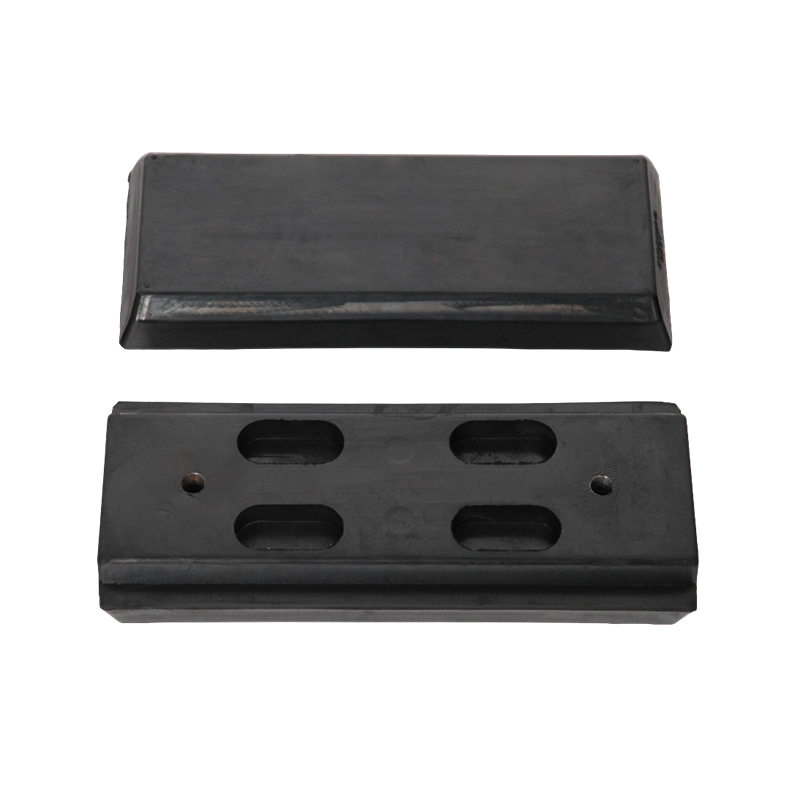 300BA Bolt-On Rubber Track Pads for ExcavatorsBolt-on pads for excavators, with high-toughness rubber and internal steel frame, suited to asphalt, concrete, and other sensitive surfaces; standard bolt fastening simplifies installation.View Product →
For chain-driven excavators, the pad has to sit flat across the links without rocking, which makes link pitch the single most important measurement.
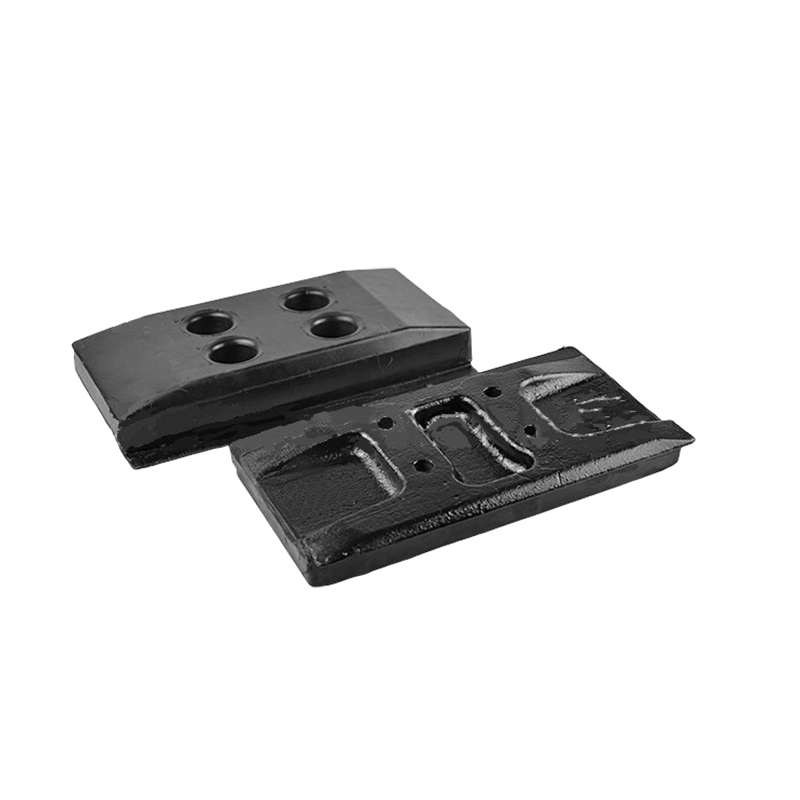 320CA Chain-On Rubber Track Pads for ExcavatorsChain-on rubber pads for chain-driven excavators; improve stability and traction on soft or uneven ground, damp vibration, reduce ground damage, and suit Caterpillar 320-series machines.View Product →
If you are not sure which family your machine belongs to, take a close-up photo of a grouser plate and a chain link. An experienced technician can usually identify the type at a glance, which is far cheaper than ordering the wrong set and shipping it back.
Getting the Size Right the First Time
Most mismatched pads come down to three dimensions, and all three take about five minutes with a tape measure.
- Pad width. Measured across the track plate in millimeters. Widths of 300, 400, 450, and 500 are common, so a few tens of millimeters matters.
- Pitch or link spacing. The distance from the center of one track pin to the next. Get this wrong and the pads will not lie flat.
- Mounting holes. Measure center to center and note the thread. If new holes are needed, check plate thickness too.
Count the total number of grouser plates while you are at it. Ordering more pads than plates means leftovers; ordering fewer means a half-finished job. Codes such as 400-106-37 or 600-126-70 appear to encode width, pitch, and mounting data, but naming conventions differ between manufacturers, so treat the numbers as a starting point rather than the final answer.
Rubber Compound and Steel Core: Where Quality Is Decided
Two pads that look identical from three meters away can last very differently. The difference lives in the parts you cannot see.
Start with the compound. Low-cost pads often use heavy recycled content or highly filled SBR, which is cheap and soft but ages quickly once a sharp stone cuts the surface. A compound built for cut and tear resistance, usually natural rubber based with a carefully controlled curing system, holds up better against the repeated impact that opens a crack and then tears it wider.
Then there is the metal frame. The pad has to hold rubber onto steel for its whole service life, and that happens through vulcanization bonding the two into one piece rather than rubber simply sitting on a plate. Steel thickness, welding quality, and clean bonding preparation decide whether a pad finishes a season or sheds its rubber at the worst possible moment.
Grip on wet ground comes from the same place. A softer, more conforming compound does bite better, but it wears faster. That trade-off is why a manufacturer who mixes its own rubber can tune a pad to your ground conditions instead of offering one hardness for everything.
Matching the Pad to the Ground You Actually Work On
"Rubber track pads for excavators" covers a wide range, and the best choice usually follows the surface rather than the machine brand.
- Paved roads and urban work. Prioritize surface protection and low noise. Wear life matters less than not marking the ground.
- Mixed ground, gravel, and dirt. Prioritize cut resistance and grip. This is the general-purpose middle ground.
- Vibration-sensitive equipment or long shifts. Prioritize thicker rubber and an anti-vibration design that reduces what reaches the undercarriage and the operator.
- Rain, snow, heat, or long outdoor exposure. Prioritize weather resistance in both the rubber and the metal parts.
When in doubt, choose for the surface you work on most of the time, not the worst surface you see twice a year. Over-specifying costs money without buying much in return.
 500CA Anti-Vibration Chain-On Rubber Track PadsChain-on rubber pads for heavy equipment; high-quality rubber absorbs vibration, helps reduce slippage or sinking on mud, gravel, and fragile paved surfaces, and lowers noise.View Product →
Installation and Care That Actually Pays Off
- Clean dirt and debris off the grouser plates and links before fitting anything.
- Start bolts by hand so you do not cross-thread, then torque to the value the manufacturer specifies.
- Re-check bolt torque after the first few hours of use, then again after the first week.
- Walk the machine and look at the pads before each shift. A missing bolt is cheap to fix; a lost pad usually is not.
- Keep pads away from hydraulic oil and grease spills. Rubber that ignores sunlight still does not enjoy sitting in oil.
Storage matters as well. Stack pads flat, out of extreme heat and cold, and do not crush them under heavy loads. It sounds trivial, but it protects the shape you paid for. If you want a more detailed walk-through of pad types and fitting, our longer guide to rubber track pad types, benefits, and installation covers it step by step.
Ordering Pads and Talking to a Manufacturer
Most buyers we work with are not shopping for a single machine. They are supplying a fleet, a rental yard, or a product line, and the useful information is different at that scale.
- Drawings or a physical sample of the old pad, including bolt hole positions.
- The ground conditions and climate the machine works in.
- How many tracks and how many plates need covering.
- Whether this is a repeat order or a one-time spare parts purchase.
This is where in-house rubber mixing and internal metal frame production matter. Changing a compound or adjusting a frame does not wait on an outside supplier's schedule. Capacity matters too: a factory running hundreds of containers a year can hold stock for you and shorten lead times in a way that a small workshop simply cannot. If you want to see what already exists before going custom, the rubber track pads catalog is organized by mounting type and is the fastest way to browse current specifications.
Rubber track pads are not a complicated product. The engineering sits in the compound, the bonding, and the steel frame, and none of that is visible from the outside. The step that matters most is still the simplest one: measure your track, confirm how the pad mounts, and order from there. After that, it is just a matter of deciding whether you want a pad that lasts a season or one that lasts three.


