


 中文简体
There is a particular rhythm to a piling site. Before the first pile moves, the crew has already walked the ground, checked levels and had a quiet conversation about where the rig should sit. Pile driving rewards that preparation. The work is simple in principle — a pile is forced into the ground until it reaches a layer that can carry the load — but the variables around it are not. Soil changes every few metres, nearby buildings have opinions about vibration, and the machine itself is heavy enough to leave a mark on everything it crosses. What follows is a practical walk through the methods, the machine choices and the small details that keep a piling programme on schedule.
What Pile Driving Really Means
Strictly speaking, pile driving is installation by force rather than by excavation. A hammer strikes the pile head, or a driver oscillates it, and the pile displaces or compresses the soil as it descends. Bored and drilled shafts are piling too, but they remove material instead of displacing it, and most crews describe them separately for that reason.
The purpose is consistent across both approaches: transfer structural load through weak upper soil to a stiffer stratum, or provide lateral and uplift resistance where a shallow foundation would settle. Three things decide how a pile behaves once driving begins — the energy delivered at the head, the stiffness and wall thickness of the pile itself, and the soil it travels through. Change any one of them and the driving resistance changes with it, which is why a set of driving records from a neighbouring site is useful context but never a guarantee.
The Main Methods, and Where Each Fits
Most contracts are won or lost on method selection. The table below is the short version we usually share with crews who are still weighing options.
| Method | How it works | Typical fit | Watch-outs |
|---|---|---|---|
| Drop or diesel hammer | A heavy ram falls onto the pile head; diesel units use combustion to lift the ram. | Short to medium piles in granular soil, simple site setups. | Noise, high peak force, limited control on slender piles. |
| Hydraulic impact hammer | Hydraulically lifted ram with adjustable stroke and energy. | Urban work, concrete and steel piles, vibration-sensitive neighbours. | Higher equipment cost; energy settings need an experienced hand. |
| Vibratory driver | Counter-rotating weights clamp to the pile and oscillate it into the ground. | Sheet piles, casing, sandy and silty ground, extraction work. | Less effective in stiff clay; vibration still needs monitoring. |
| Press-in rig | Static reaction force pushes the pile down, often gripping previously driven piles. | Tight urban sites with strict noise and vibration limits. | Slow cycle, needs a reaction base and careful sequencing. |
| Helical pile | A steel shaft with helical plates is rotated into the ground. | Light structures, underpinning, solar arrays, slope stabilisation. | Capacity read from torque; difficult in dense ground or cobbles. |
Modern rigs add a layer of measurement that older crews would have appreciated. GPS and laser guidance keeps the leader over the design position, inclinometers catch a pile going out of plumb before it is too deep to correct, and hammer-mounted monitoring records blows per 250 mm so the whole team can see when refusal is approaching. Dynamic testing on a sample of piles turns those records into a capacity figure rather than an educated guess.
Matching the Machine to the Ground
Ground conditions decide more than the hammer chart does. A rig that is perfectly capable on a prepared platform will bog down in a soft corner of the same site, and recovering it costs far more than the working platform would have. Bearing pressure under the tracks, not machine weight alone, is the number worth checking against the geotechnical report.
Access is the other half of the puzzle. Gate widths, overhead cables, buried services and the turning circle at the site entrance all shape which rig can be mobilised. On constrained sites, a smaller carrier handling casings and reinforcement while a dedicated piler works the pile line is often quicker than forcing one large machine to do everything. Where the rig has to cross finished asphalt, a yard or a public footpath, the undercarriage becomes a surface-protection question as much as a traction one.
Where Tracked Carriers and Rubber Pads Earn Their Place
Purpose-built piling rigs generally run on steel track shoes, and that is unlikely to change. The machines around them — excavators handling casing, dozers trimming a platform, compact carriers moving mats — are a different story, and many of them travel on rubber tracks or steel shoes fitted with rubber pads.
The benefits are practical rather than dramatic. Rubber spreads load, grips wet asphalt and concrete better than bare steel, and takes the edge off the noise and vibration that transmit through the undercarriage. On a site where the rig has to cross a road or work beside a finished surface, that difference is often the reason the machine is allowed on site at all. Our rubber track pads are grouped by mounting style for exactly this reason, since the fixing method usually decides what fits.
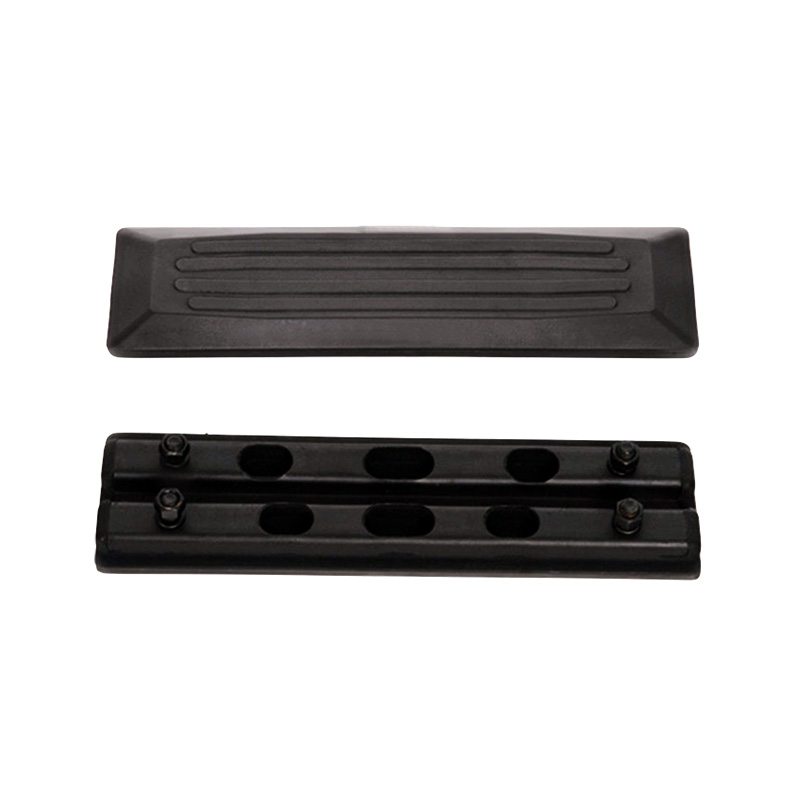 300BA Bolt-On Rubber Track Pads for ExcavatorsBolt-on excavator pads with rubber exterior and steel frame, suited to asphalt and concrete work where individual replacement and ground protection matter.View Product →
Bolt-on pads are the most common choice for excavators working around a piling platform, because they can be replaced individually when a section wears down.
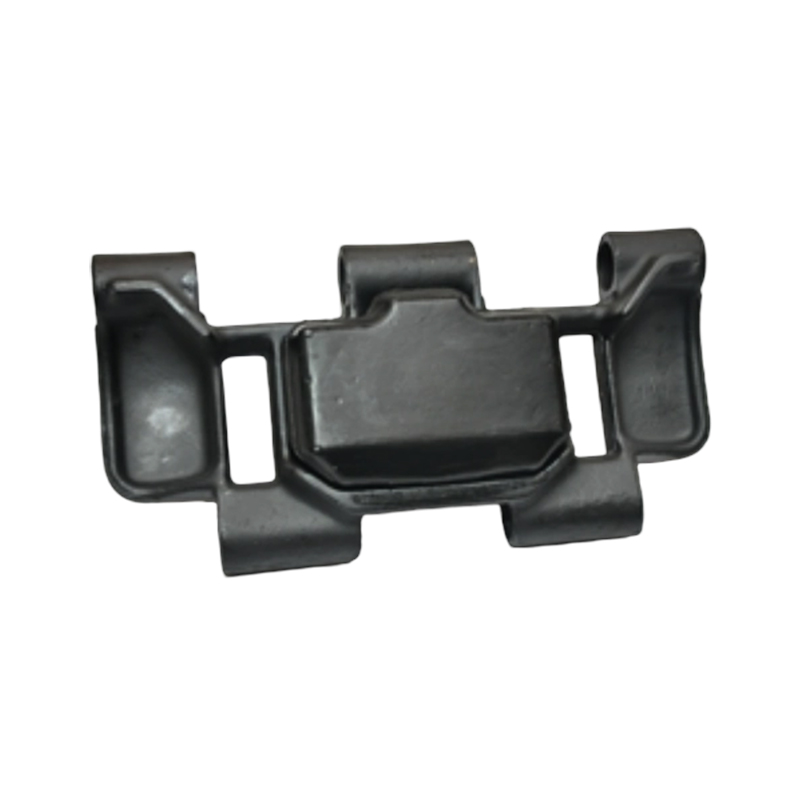 500BA All-Terrain Bolt-On Rubber Track PadsAll-terrain bolt-on pads for tracked machinery moving between hardstanding, mud and gravel, with rubber construction for grip and surface protection.View Product →
Where a carrier moves between compacted hardstanding, mud and gravel in the same shift, an all-terrain compound copes with the mixed conditions better than a hard, road-oriented pad.
 500CA Anti-Vibration Chain-On Rubber Track PadsChain-on rubber pads designed to absorb vibration on construction and road-maintenance equipment, while protecting fragile paved surfaces and reducing noise.View Product →
Anti-vibration pads are worth considering for support equipment working close to freshly poured concrete or instrumentation, where transmitted oscillation matters. Be realistic about the limits: no rubber pad turns a 60-tonne impact hammer rig into a silent neighbour, and none of them replace a proper working platform.
Checks Worth Doing Before the Rig Arrives
- Confirm the working platform is level, drained and compacted to the bearing pressure the rig actually imposes.
- Walk the travel route for services, culverts, cellars and soft spots that a drawing will not show.
- Agree vibration limits with the client and set monitoring points on the nearest sensitive structures.
- Check pile lengths, deliveries and laydown space so the rig is not waiting on a lorry at 8 a.m.
- Brief the crew on the driving criteria and who has authority to stop when readings drift.
Maintenance Habits That Keep a Piling Crew Moving
Downtime on a piling site is expensive, and most of it is avoidable. Leaders, guides and hammer anvils wear predictably, so replacing them on a schedule beats replacing them mid-programme. Hydraulic hoses and clamps deserve a look every shift, especially on vibratory units that see constant oscillation. Track tension, pad bolts and shoe fixings are quick to check and unpleasant to discover at the far end of a travel route — our guide to track pad types and installation covers the fitting details if you are changing a set.
- Torque pad bolts after the first few hours of running, then at routine intervals.
- Keep a small stock of the most worn pad position rather than a full spare set.
- Record blows per unit of penetration daily; trends reveal problems earlier than failures do.
Pile driving has a reputation for being blunt work, but the crews who finish early are usually the ones who thought hardest before the rig moved. Method, ground and machine have to agree, and the undercarriage is part of that agreement — whether that means steel shoes on a dedicated piler or rubber pads on the carriers supporting it. Get those pieces lined up and the noise, the vibration and the schedule all become a little easier to live with.


