


 中文简体
Digger track pads sit between a steel undercarriage and the ground. They are small, unglamorous parts, easy to forget about until a paved yard starts getting chewed up or an operator complains about vibration coming up through the cab. We have been building them at our own factory in Jiangsu since 2010, and most pad problems we see trace back to a few decisions made long before anyone picks up a wrench.
Here is our practical view of those decisions: how the three fixing types differ, what the rubber compound and steel core actually contribute, and how to fit and maintain pads so they reach the end of their working life.
What Digger Track Pads Actually Do
A track pad is a rubber block that fits over or replaces the steel shoe on a tracked machine. It does four jobs at once, and all four matter when you are choosing a specification.
- Protecting the surface. Rubber spreads the load and keeps steel edges off asphalt, concrete, block paving and workshop floors.
- Improving grip. A treaded rubber face bites better than bare steel on wet tarmac, mud and packed gravel.
- Cutting noise and vibration. The rubber layer absorbs a share of the shock that would otherwise travel up through the undercarriage into the cab.
- Protecting the shoe itself. The pad takes the wear, and pads are far cheaper to replace than a worn track chain.
Pads are usually specified by the surface a machine works on and how much it travels over hard ground, not simply by machine size.
The Three Fixing Types, and How to Choose Between Them
Bolt-on pads are the most secure option we make. The shoe is drilled and tapped, and the pad is bolted through it. That mechanical fixing resists side loading and twisting well, which is why bolt-on pads are common on excavators that turn hard on concrete. The trade-off is fitting time: the shoe has to be prepared first.
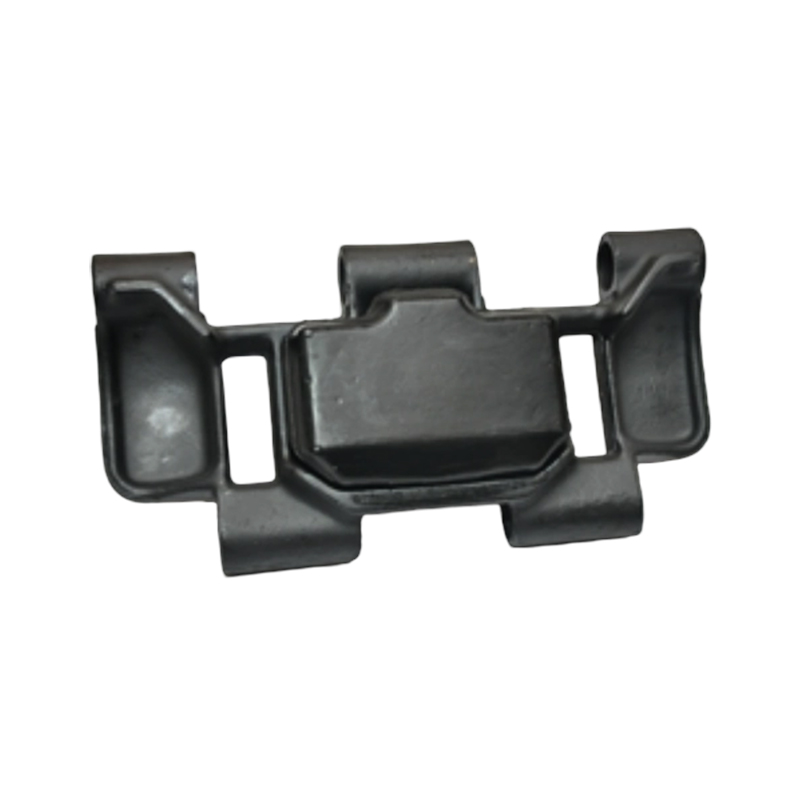 300BA Bolt-On Rubber Track Pads for ExcavatorsBolt-on pads for excavators, using a bolted fixing for secure mounting while protecting asphalt and concrete from scratches and indentations.View Product →
Clip-on pads use a sprung clip pressed or hammered onto the shoe, so nothing needs drilling and nothing has to be unbolted when a pad wears out. On dozers and agricultural machines, where pads are often changed in the field, that matters a great deal. The clip is the part to watch: if it stretches or corrodes, the pad starts to move.
Chain-on pads are linked into the chain run rather than attached to an individual shoe. They suit chain-driven machines and carriers whose undercarriage was never designed to take bolts or clips.
A quick side-by-side
| Fixing type | How it attaches | Machines we see it on | Main strength | Watch out for |
|---|---|---|---|---|
| Bolt-on | Bolted through a drilled and tapped shoe | Excavators, larger carriers | Strongest hold under side load | Longer fitting, shoe preparation |
| Chain-on | Linked into the chain run | Chain-driven excavators, carriers | No shoe modification needed | Chain tension and fit tolerance |
| Clip-on | Sprung clip pressed onto the shoe | Dozers, agricultural machinery | Fastest to fit and remove | Clip stretch and corrosion |
Matching Pads to the Ground You Work On
Once the fixing type is settled, the next question is the working environment. A pad that performs beautifully on a clean concrete slab can be the wrong choice in a quarry, and the other way round.
For machines that move between mud, gravel, sand and hard standing, an all-terrain tread keeps grip reasonably consistent across all of them. Where equipment runs in rain, snow or a hot summer on the same site, all-weather compounds are formulated to stay flexible across a wider temperature band instead of going brittle in the cold.
Vibration is the third consideration. On equipment where shock travels into a sensitive structure, or where an operator spends a long shift in the seat, an anti-vibration pad with a softer, thicker rubber layer does noticeably more work than a standard one.
 500CA Anti-Vibration Rubber Track Pads for Heavy EquipmentAnti-vibration pads for heavy equipment, designed to absorb shock, reduce ground damage, and improve stability on mud, gravel, and fragile paved surfaces.View Product →
Compound, Thickness and the Steel Core Inside
The rubber is only half of a track pad. The other half is the metal frame buried inside it, and the bond between the two is where cheap pads eventually fail.
We mix our own rubber compound and press our own internal metal frames rather than buying ready-made rubber sheet and inserts. That is not a marketing detail. It means we control the cure, the hardness, and the way the rubber grips the frame during vulcanising, which is the difference between a pad that wears down evenly and one that delaminates at the edge.
Thickness is a balance rather than a case of more being better. A thicker pad lasts longer on abrasive ground but adds weight to the chain and can change ground clearance. Harder compounds resist cutting and chunking; softer ones grip better and absorb more vibration. We test both directions in our own lab before a compound goes into production.
Fitting Digger Track Pads So They Last
Fitting is where a good pad is most often let down. A few minutes of preparation saves a season of re-torquing.
- Clean the shoe face and check it for wear, distortion or old rubber left behind. A pad sitting on a dirty or bent shoe will never sit flat.
- Inspect shoe bolts or clip seats for damage before fitting anything new.
- Tighten in a cross pattern rather than running around the shoe in one direction, so the pad beds down evenly.
- Work across the machine in stages, alternating sides, so the chain does not sit unevenly while you work.
- Re-check torque after the first few hours of running, then again at the first service interval.
- Replace worn pads in sets where possible. Mixing new and heavily worn pads on one chain accelerates wear on the newer ones.
If you want more background on the different pad families and how they install, our guide to rubber track pad types and installation goes into more detail.
Reading Our Model Codes
Our catalogue names pads with a number and a letter suffix. The letter follows the fixing family, so BA is bolt-on, CA is chain-on, and HA, HB and HC are clip-on. The number points to the size family, and where a full dimensional code appears, such as 400-106-37, 400-125-56 or 600-126-70, the groups describe the pad's principal dimensions and mounting pattern.
Codes are short-hand, not a substitute for checking the machine. The same excavator model can leave the factory with different shoe widths depending on the market it was built for, so we always confirm the actual shoe before shipping.
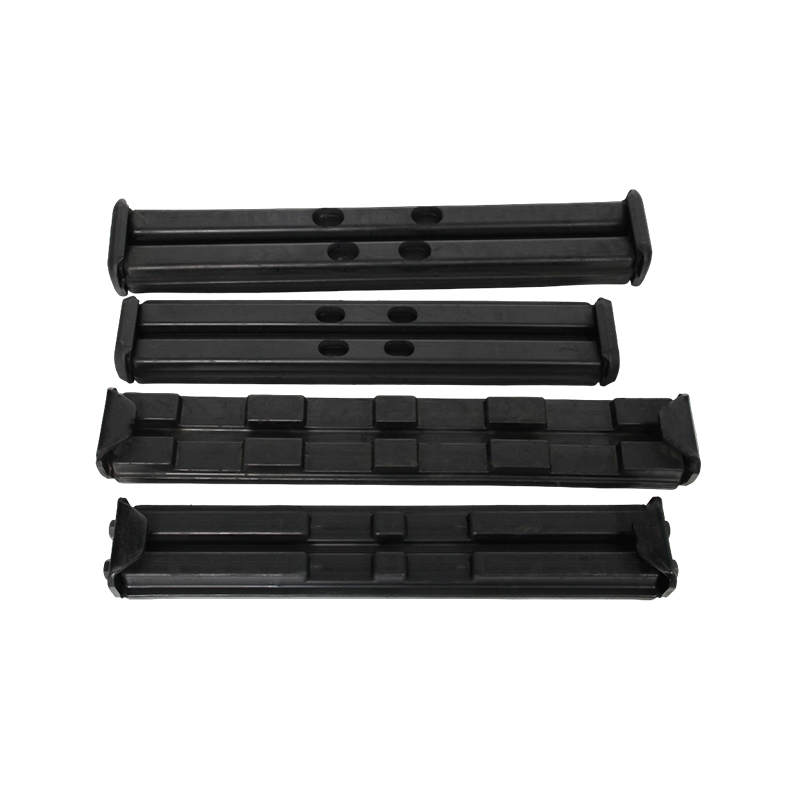 450HC Clip-On Rubber Track Pads for Agricultural MachineryClip-on rubber pads for tractors and harvesters, reducing soil compaction and improving traction on soft, muddy, or uneven ground.View Product →
What to Send Us for a Quote
We build to drawings and samples as well as to catalogue items, so the more you tell us up front, the faster a quote comes back with the right answer in it.
- The machine make, model and year, if you know them.
- Shoe width, pitch, or a photo of the shoe with a tape measure across it.
- A drawing, a sample pad, or the part number currently on the machine.
- The quantity you need and whether it is a one-off or repeat order.
- The surfaces and conditions the machine works in, and whether noise or vibration is a specific concern.
Digger track pads are a small purchase with a long tail of consequences, from the state of your yard to the comfort of whoever is in the seat. Get the fixing type right, match the compound to the ground, and fit them properly, and they will do their job quietly for a long time. If you are unsure which of our pads suits your machine, send us the details and we will work it out with you.


