


 中文简体
Cold milling is one of those construction terms that sounds technical until you see it on a road project. A cold planer moves slowly along the pavement, a drum spins beneath the machine, and damaged asphalt disappears in a controlled line instead of being broken up by a breaker. The process is called cold milling because the pavement is removed without heating it first. For contractors, the appeal is practical: the machine can take off a precise layer, leave a surface ready for resurfacing, and keep dust and noise within manageable limits when the job is set up well. But the part many people overlook is what happens between the machine and the ground. On tracked cold planers, rubber track pads influence stability, vibration, surface protection, and the daily rhythm of the work.
What Cold Milling Actually Does
Cold milling is a controlled removal process. A cold planer, also called a milling machine, uses a rotating drum fitted with carbide-tipped teeth to cut asphalt or concrete. The operator sets a depth, usually from a few centimeters up to a full lane thickness, and the machine advances while the drum discharges milled material onto a conveyor. The conveyor loads the spoil into a truck, and the pavement behind the machine is left with a textured profile. That profile matters because it gives the new overlay something to bond to and helps maintain grade and cross-slope.
Cold milling is common in road rehabilitation, bridge deck repair, utility trench restoration, and surface preparation before resurfacing. It is also used to remove lane markings, correct drainage issues, and create a clean edge along curbs or gutters. The work is measured in depth and profile, not simply in how much material is removed.
| Work type | Typical depth | What matters on site |
|---|---|---|
| Surface refresh | 25-50 mm | Consistent depth and a clean profile |
| Structural repair | 50-100 mm | Stable tracking and accurate grade control |
| Full-depth removal | 100 mm and above | Traction, load distribution, and dust control |
These are general ranges, not fixed rules. The right depth depends on the pavement condition, the specified overlay, and the machine's capability. The point is that cold milling is not a blunt demolition tool. It is a measured cut, and the machine has to stay steady while making it.
How a Cold Planer Works, Step by Step
Most cold milling jobs follow a similar sequence. The details change with the machine and the specification, but the logic is consistent from one site to the next.
- Survey and mark the work area. The crew confirms depth, grade, drainage, and the location of utilities before the machine enters the cut.
- Position the cold planer. The drum is aligned with the cut line, and the tracked undercarriage is set on a stable surface. On tracked machines, the pads are the contact point with the pavement.
- Start the cut. The drum is lowered to the target depth, the conveyor begins loading trucks, and dust suppression is checked. A smooth start helps avoid a stepped or torn edge.
- Monitor grade and profile. Sensors, stringline, or 3D control keep the cut within tolerance. The operator watches for changes in material, sudden resistance, and tracking drift.
- Discharge and clean up. Milled material is loaded out, the working area is swept, and the new surface is inspected before the next stage begins.
Each step depends on the machine staying planted. If the undercarriage slips, the drum can leave a rough profile or cut deeper than intended. That is why track condition and pad selection are not minor details in cold milling.
Why Rubber Track Pads Matter in Cold Milling
Cold planers are heavy, and they work on hard, abrasive surfaces. Steel tracks alone can scar the pavement, generate noise, and transmit vibration through the machine. Rubber track pads create a cushion between the undercarriage and the ground. They improve grip on milled surfaces, distribute load over a wider area, and reduce the vibration that reaches the frame, the operator, and nearby structures. On bridge decks, concrete surfaces, and freshly milled lanes, that cushioning can make the difference between a clean pass and a trail of marks.
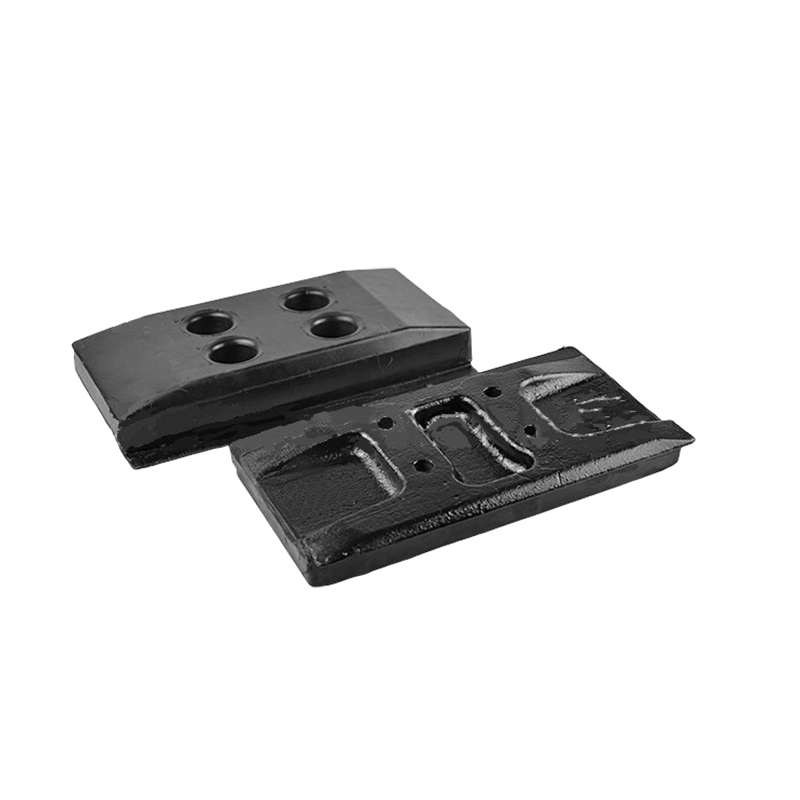 500CA Anti-Vibration Rubber Track Pads for Heavy EquipmentThese 500CA pads use rubber to cushion tracked equipment, reduce vibration, and protect surfaces during cold milling and heavy machinery work.View Product →
Pad condition also affects grade control. Worn or missing pads change the machine's stance, which can show up as tracking drift or an uneven cut. In cold milling, where depth tolerance is often tight, a small change at the track can become a visible defect in the pavement. Anti-vibration pads are especially useful on equipment that runs at high load and constant motion, because they help take the edge off the vibration without giving up traction.
Choosing the Right Pad for the Job
Rubber track pads are not a single universal part. They are selected by mounting style, machine type, and working conditions. Bolt-on pads use a secure bolted fixing and are straightforward to replace when worn. Chain-on pads suit certain chain-driven machines and equipment layouts. Clip-on pads are common on dozers and agricultural machinery, where quick fitting and a stable hold matter.
For cold milling support equipment and road machines, a bolt-on all-terrain pad like the 500BA can be a practical starting point because it combines a secure fixing with a tread pattern intended for mixed ground conditions. It is not the only option, but it illustrates the logic: match the pad to the machine, the surface, and the way the crew works.
 500BA All-Terrain Bolt-On Rubber Track PadsThese bolt-on all-terrain pads offer traction and surface protection for tracked machinery, making them a practical option for mixed ground and road work.View Product →
You can browse the full rubber track pad catalog to compare mounting styles and model codes. For a broader look at pad types, benefits, and installation, our rubber track pad guide is a useful reference before ordering.
Maintenance and Practical Checks on Site
Cold milling is hard on undercarriages, so pad maintenance should be part of the daily routine rather than an afterthought. A few simple checks can prevent a small issue from turning into a lost shift.
Daily checks that save downtime
- Inspect pads for cuts, chunking, embedded stones, and uneven wear.
- Check bolts and fixings for looseness after the first hours of work and at regular intervals.
- Look for missing pads that change the machine's stance or load distribution.
- Clean debris from the undercarriage before it works into the track system.
- Watch for tracking drift, unusual vibration, or noise that was not present before.
When to replace
Replace pads when the tread is worn beyond a safe grip, when cracks reach the fixing area, or when repeated looseness suggests the pad no longer holds its shape. Rotating pads between positions can help even out wear, but it does not replace a proper inspection. Keep a simple record of installation dates and wear patterns. That record makes it easier to plan replacements before a cold milling job starts, rather than during it.
Working With a Manufacturer Who Understands the Details
At Wangtian, we have been producing rubber tracks and rubber track pads since 2010. Our work covers rubber mixing, metal frame production, stamping, robotic welding, vulcanization, and testing under one roof. That vertical control matters for pads used in demanding work like cold milling, because the bond between rubber and metal is where many failures begin. We also maintain a testing laboratory and a large vulcanization workshop, and we can develop products from customer drawings or samples.
Our annual capacity is around 500 containers, and we support customers with stock preparation to shorten delivery cycles. Products from our factory have been exported to Japan, the Netherlands, Singapore, and more than ten other countries. If you are specifying pads for road machinery or support equipment, we are happy to talk through the machine, the surface, and the working conditions before recommending a model.
Cold milling rewards preparation. The drum gets the attention, but the undercarriage keeps the cut steady. The right rubber track pads help protect the surface, reduce vibration, and keep the machine working as intended. Whether you are planning a resurfacing project or maintaining a fleet, it is worth looking at the contact point between the machine and the road.


