


 中文简体
What Are Bulldozer Rubber Track Pads?
Bulldozer rubber track pads are vulcanised rubber blocks that fit over each steel track shoe. They create a resilient contact layer between the machine and the ground. On a dozer, this layer matters more than on some other equipment because the blade load pushes the whole machine forward; the track pads are constantly pressed into the surface, especially during reverse and turning.
Without rubber pads, a steel shoe running on asphalt or concrete causes surface damage and sets up heavy vibration. The steel also wears faster in abrasive dust and gravel. Rubber pads dampen those shocks, reduce spray from the track, and give the machine a softer footprint when moving across parking lots, bridge decks, or newly compacted fill.
In addition, the rubber tread can be designed with a certain lug pattern to help water and mud escape. That improves grip on wet surfaces and prevents mud from packing around the undercarriage.
Types of Bulldozer Track Pads
Most dozer track pads use one of three attachment systems. The choice affects installation time, how firmly the pad stays on the shoe, and how much flex the undercarriage keeps when travelling over uneven surfaces.
Bolt-On Bulldozer Track Pads
Bolt-on pads are the heaviest-duty design. A hard rubber block is secured with countersunk bolts that pass through the pad body and thread into the steel shoe. The bolt pattern has to match the shoe exactly, and the bolts should be torqued according to the pad manufacturer's specification.
This style suits dozers that operate at higher speeds, push abrasive material, or stay on the pads for a long season. The wide contact surface reduces rocking, which helps prevent dirt from working its way under the pad.
Chain-On Bulldozer Track Pads
Chain-on pads use a steel chain that wraps around the shoe and hooks on the inside of the track. They are quicker to fit than bolt-on pads and are often the first choice for machines that need pads installed for a specific job and removed afterwards.
The holding force is slightly less rigid than bolting, so chain-on pads work best for moderate dozing loads. However, the convenience of installation and removal makes them popular on machines that share pads between different sites.
Clip-On Bulldozer Track Pads
Clip-on pads use spring-steel clips that grip the edge of the shoe without drilling. The clips are shaped to hold the pad under tension, yet they can be released quickly when the pad needs changing. This style is convenient for dozers that travel on asphalt or concrete and that must be road-ready after a job.
The 400HA all-weather clip-on pad from Wangtian is a good example of this category. It combines a low-profile tread with an all-weather compound, so a dozer can travel on cold pavement in winter and still shed mud in summer. The mounting clips are designed to sit tight against the shoe and can be released without special tooling.
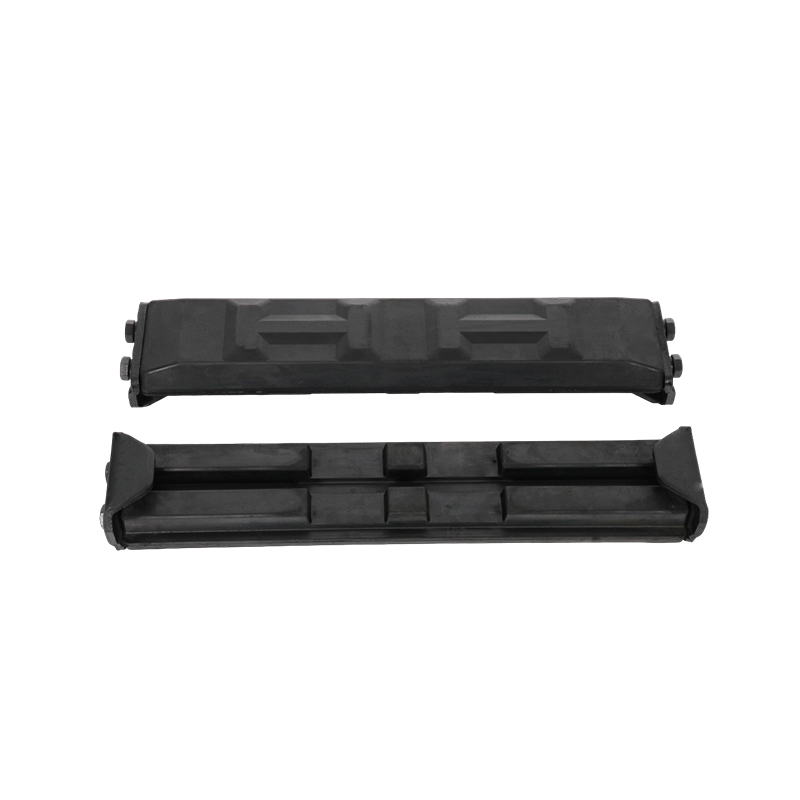 400HA All-Weather Clip-On Rubber Track Pads for DozersThese clip-on pads are easily swapped between job sites, combining a low-profile tread with all-weather compound for cold pavement traction and summer mud shedding.View Product →
Because clip-on pads are easy to swap, they are often chosen when a dozer has to move between job sites and cannot arrive with muddy steel shoes.
How to Choose the Right Bulldozer Track Pads
Choosing the right bulldozer track pads begins with the undercarriage dimensions. The two most important numbers are the track pitch and the shoe width. Track pitch is measured pin centre to pin centre on a single link; shoe width is the width of the steel shoe. Some dozer pads also require a specific distance between bolt holes if you choose a bolt-on version. If the pad is not matched to pitch and shoe width, it will walk across the shoe during use and tear the rubber.
The next decision is the compound. Hard rubber compounds last longer on abrasive ground but have less grip on wet steel plate. Softer compounds grip better and reduce vibration but can tear when the machine works on sharp rock. A good all-weather compound balances both ends. At Wangtian, we formulate our dozer pads to stay flexible at low temperatures and to resist oil and water damage.
The table below summarises the trade-offs between the three attachment styles.
| Attachment | Installation | Best for | Replacement speed |
|---|---|---|---|
| Bolt-on | Bolts through shoe holes | High-speed travel, abrasive sites | Slower |
| Chain-on | Chains wrap around the shoe | Quick swaps, moderate loads | Moderate |
| Clip-on | Clips lock over the shoe edge | Dozers on finished surfaces | Fast |
After deciding on the attachment family, use this simple process to narrow down the exact product:
- Measure the track pitch, shoe width, and bolt-hole spacing.
- Check the track frame condition; bent flanges can make pad fitting inconsistent.
- Decide how often the dozer will run on paved ground.
- Select a rubber hardness based on temperature and terrain.
- Order one pad or a small pair to test the fit before buying the full set.
For a more detailed walkthrough of pad categories and installation methods, feel free to read our ultimate guide to rubber track pads. It covers the same material in greater depth and includes extra installation tips.
Signs Your Bulldozer Track Pads Need Replacement
Track pads wear gradually, so it is easy to miss the moment when they stop protecting the steel shoe. The most obvious sign is visual: when the rubber surface wears down close to the metal insert, the pad has reached its useful limit. Other signs include:
- Cuts, chunks, or uneven wear on the tread face.
- Loose clips or bolts that need frequent re-tightening.
- Increased vibration when travelling on a flat surface.
- Louder track noise, usually a metallic clicking.
- Visible movement between pad and shoe when the track is turned.
If you see any of these signs, check the other pads on the same side before replacing. A single badly worn pad can indicate a damaged idler, a misaligned sprocket, or excessive track tension. Investing in a full set of replacement pads before steel shoes are scored is much less expensive than an undercarriage rebuild.
Why Manufacturer-Direct Rubber Track Pads Make a Difference
The pad market includes both trading companies and manufacturers, and the difference shows up in consistency. At Wangtian, we have been producing rubber track pads and rubber tracks since 2010. Our own mixing centre, metal stamping workshop, robotic welding line, and large-scale curing shop allow us to keep every step of production under one roof.
For a part as simple as a track pad, the rubber compound is what separates a long-lasting pad from a premature failure. Because we mix the rubber in-house, we can adjust hardness, oil resistance, and filler systems to suit specific climates and work cycles. The steel inserts are stamped and welded in our own facility, so the fit of the insert matches the mould cavity and the shoe geometry.
Manufacturer-direct supply also means simpler communication when you need a custom size, a different durometer, or a bulk order. Our engineers work from customer drawings and samples to modify pad shape, clip layout, and tread pattern. This is especially valuable for bulldozer owners who run older machines or non-standard undercarriage configurations. If you are comparing your options, you can browse our complete line of rubber track pad solutions or contact us with the dozer model and track dimensions.


