


 中文简体
中文简体A compact excavator has finished breaking up a concrete step outside a shopfront, and the next job is a paved courtyard thirty metres away. If the machine tracks across new asphalt on bare steel shoes, the grousers will carve permanent ruts into the surface. That is the moment most contractors decide to fit excavator rubber pads. A set of rubber pads turns a steel-tracked machine into one you can move across finished pavement, stone, and concrete without damage. The pads also improve grip on wet surfaces, cut vibration in the cab, and protect the steel undercarriage from abrasive wear. The real decision is not whether to buy them, it is which mounting style matches how the machine actually works each day.
There are three standard systems: bolt-on, chain-on, and clip-on. Each has a different trade-off between holding strength, installation time, and the condition of your track shoes. This article compares the three, then walks through sizing and quality checks so you can order the right set the first time.
What excavator rubber pads actually do
Rubber track pads are moulded rubber blocks that attach to the outer face of each steel track shoe. Their main job is to spread the machine's weight over a larger contact area. A steel grouser on a three-tonne excavator may concentrate the load onto a few square centimetres; a rubber pad spreads that same load across the full shoe. Lower ground pressure means concrete, asphalt, pavers, and turf stay intact. The rubber layer also damps the vibration that would otherwise travel from the track into the frame and the operator's cab. On wet pavement or smooth steel decking, the rubber compound delivers more grip than bare metal. Finally, because the pad takes the scuffing and abrasion, the steel shoes, pins, and bushings wear more slowly, which extends the life of the whole undercarriage.
The three mounting styles
Suppliers group excavator rubber pads by how they attach to the steel shoe: bolt-on, chain-on, or clip-on. The names describe the fixing method, and the fixing method determines how secure the pad is, how long installation takes, and whether the shoe needs to be pre-drilled or modified.
| Feature | Bolt-on | Chain-on | Clip-on |
|---|---|---|---|
| Attachment | Bolts through pre-drilled holes in the shoe | Connecting chain wraps around the shoe | Spring or wire clip locks onto the shoe edge |
| Installation | Moderate; needs alignment and torquing | Fast; no shoe modification | Fastest; usually no tools |
| Security | Strongest hold | Secure when chain tension is maintained | Secure on clean shoe profiles |
| Best suited to | Long periods on paved surfaces | Same-day switching between soft and hard ground | Frequent rubber-to-steel changes |
| Main trade-off | Most labour to fit and remove | Chain is a wearing part that needs inspection | Requires shoes in good condition |
Bolt-on pads for long-term street work
Bolt-on pads are the default for excavators that spend most of their time on hard surfaces. Each pad has a steel backing plate moulded into the rubber, and bolts pass through that plate into threaded holes in the track shoe. Once torqued, the pad stays put even when it scrapes against kerbs and concrete edges. That makes bolt-on the most secure system and the one with the longest service life under continuous paved-surface work. The trade-off is installation time, because every shoe must be aligned and torqued correctly, which is why bolt-on pads are fitted at the start of a season and left on. For machines with pre-drilled shoes, the durable bolt-on rubber track pads for excavators in Wangtian's 300BA series offer one-piece moulding around a steel plate and a wear compound designed for daily street and site work.
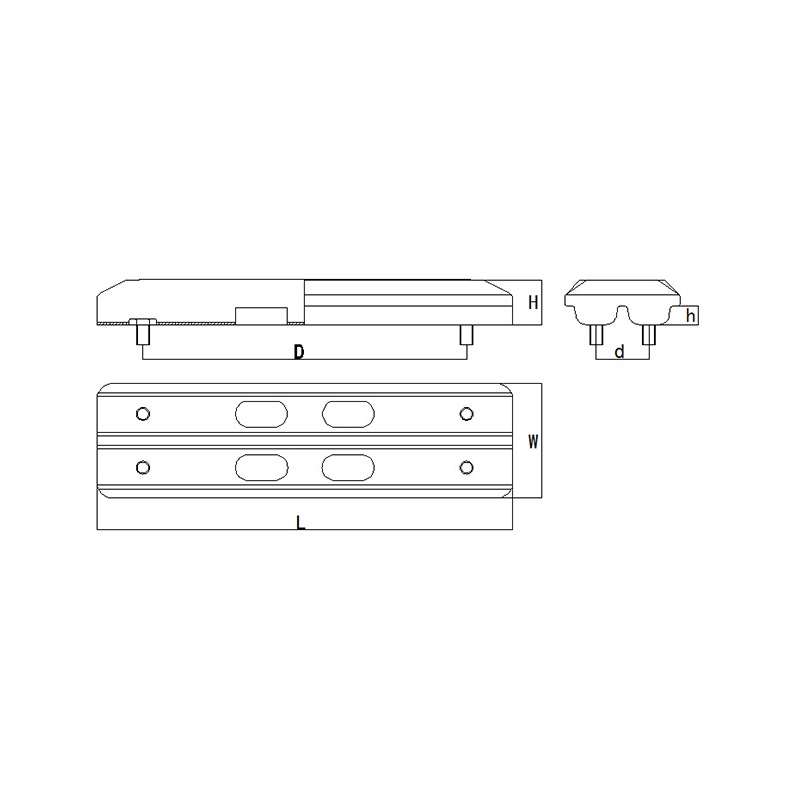 Wholesale 300BA Durable Bolt-On Rubber Track Pads for Excavators Suppliers, FactZhejiang Shuangniao Lifting Equipment Co., Ltd. is China wholesale 300BA Durable Bolt-On Rubber Track Pads for Excavators suppliers and f...View Product →
Chain-on pads for quick changeover
Chain-on pads fasten with a connecting chain that wraps around the shoe and locks into the rubber body. No pre-drilled holes are needed, and a full set can be fitted or removed in a fraction of the time a bolt-on set takes. This suits machines that move between soft ground and sealed pavement several times a day: leave the pads on for the street section, pull them off for the digging phase. Because the chain and its pocket are separate wearing parts, give them a quick visual check each morning and re-tension if needed. For excavators that run this type of undercarriage, Wangtian's track pads for chain-driven excavators use a recessed chain pocket that keeps the connecting link protected from stone impact and mud packing.
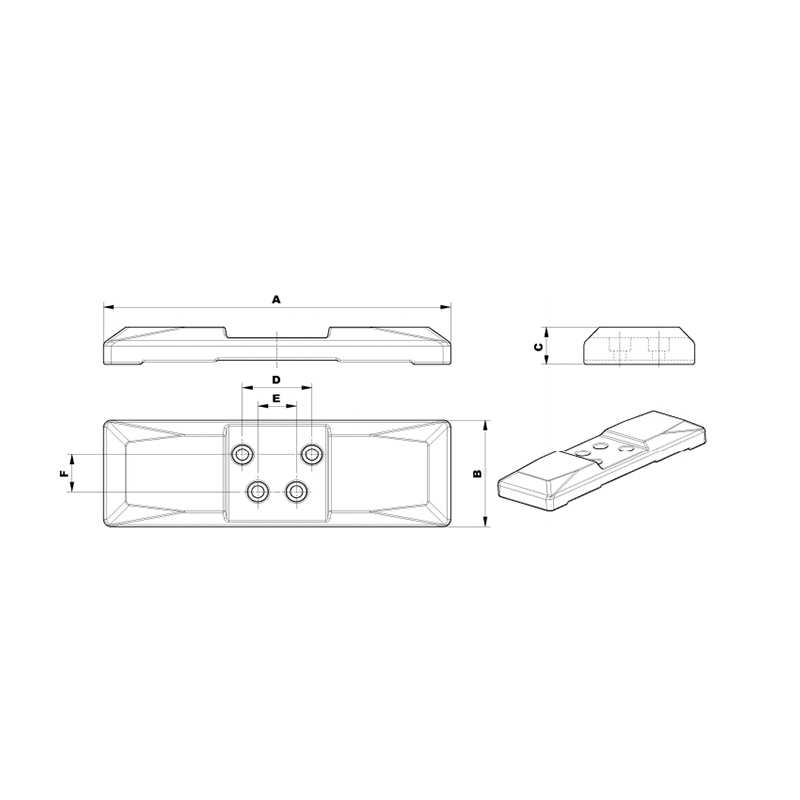 Wholesale 320CA Track Pads for Chain-Driven Excavators Suppliers, Factory - ZhejZhejiang Shuangniao Lifting Equipment Co., Ltd. is China wholesale 320CA Track Pads for Chain-Driven Excavators suppliers and factory,320...View Product →
Clip-on pads for fast switching
Clip-on pads are the quickest system to fit. A spring clip or wire retainer snaps over the edge of the steel shoe, so there are no bolts to torque and no chains to tension. Operators who switch between rubber and steel several times a week save real time over a season. The system depends on the shoe having a clean, consistent edge profile; worn or bent shoes will not hold the clip tightly. Clip-on pads are common on compact excavators and small dozers for this reason. The same construction logic appears across Wangtian's range, for example in the all-weather clip-on rubber track pads for dozers, where a one-piece rubber body wraps the shoe and the clip locks into the underside. If your excavator shoes share that rolled edge profile, the clip-on style is worth a closer look.
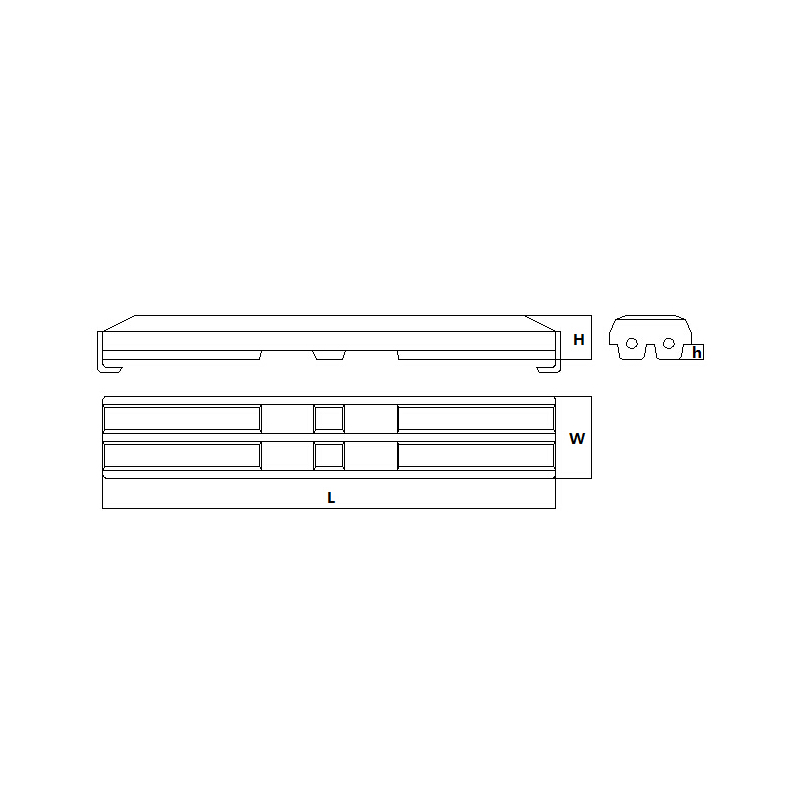 Wholesale 400HA All-Weather Clip-on Rubber Track Pads for Dozers Suppliers, FactZhejiang Shuangniao Lifting Equipment Co., Ltd. is China wholesale 400HA All-Weather Clip-on Rubber Track Pads for Dozers suppliers and f...View Product →
Finding the right size and fit
Rubber pads are not a universal size. Each pad must match the track shoe width, the pitch between track pins, the bolt-hole pattern for bolt-on types, and the edge profile for clip-on types. Model numbers make repeat ordering easier: a code such as 400-106-37 bundles several dimensions into one reference. The convention is not identical from factory to factory, so confirm the pad against your actual shoe measurements or the manufacturer's technical drawing before ordering. Once you have those numbers, compare them against the full rubber track pad range in Wangtian's catalogue to see which series matches.
- Measure the steel shoe width and the distance between pin centres.
- For bolt-on pads, check the bolt-hole diameter and spacing on your shoe.
- For clip-on pads, note the shoe edge profile and grouser height.
- If you run an older or less common machine, ask whether the manufacturer can make custom sizes from a drawing or sample.
What to check before you buy
Track pad quality comes down to three things: the rubber compound, the steel insert or retaining hardware, and the consistency of the moulding. A good compound balances hardness and elasticity; too soft a pad wears quickly on asphalt, while too hard a pad transmits vibration and reduces grip. The steel backing plate must be clean, prepared, and fully bonded to the rubber, otherwise the pad will separate under bolt torque. Every moulding should be free of voids, bubbles, and ragged flash, with clean edges around each bolt hole. The factory behind the product matters just as much. A manufacturer that mixes its own rubber and stamps its own steel backing plates controls quality at both ends of the process. Wangtian, for example, runs an in-house mixing centre, metal stamping workshop, and vulcanising lines, and tests pads in its own laboratory before dispatch. This vertical control shows up in batch-to-batch consistency, which is what you need when you are buying pads in quantity.
Lead time and custom work are also worth clarifying up front. Factories with their own mixing and moulding capacity can usually respond faster to size variations and custom orders. When you request a quote, include the machine model, shoe dimensions, and the number of pads you need, and ask for the compound hardness and any available test data.
The right excavator rubber pads are not the most expensive components on the machine, but they protect some of the most expensive surfaces you will ever drive across. Start with the mounting style that matches your workflow: bolt-on when the excavator stays on hard ground for long periods, chain-on when the day alternates between digging and street work, and clip-on when you change pads often. Confirm the dimensions against a technical drawing, then buy from a manufacturer that controls the rubber compound and the steel insert in-house. If you are still weighing the options, the ultimate guide to rubber track pads explains types, benefits, and installation in more detail. Get these decisions right, and the pads will pay for themselves in avoided surface repairs and a longer-lasting undercarriage.


