


 中文简体
中文简体For over fifteen years, the team at Wangtian has designed and manufactured rubber track pads for tracked machinery used all over the world. During that time, bolt-on rubber track pads have remained the most requested mounting style in our catalog. This guide explains what makes them so popular, how they are built, and how to choose the right set for your excavator or compact track loader.
What Are Bolt-On Rubber Track Pads?
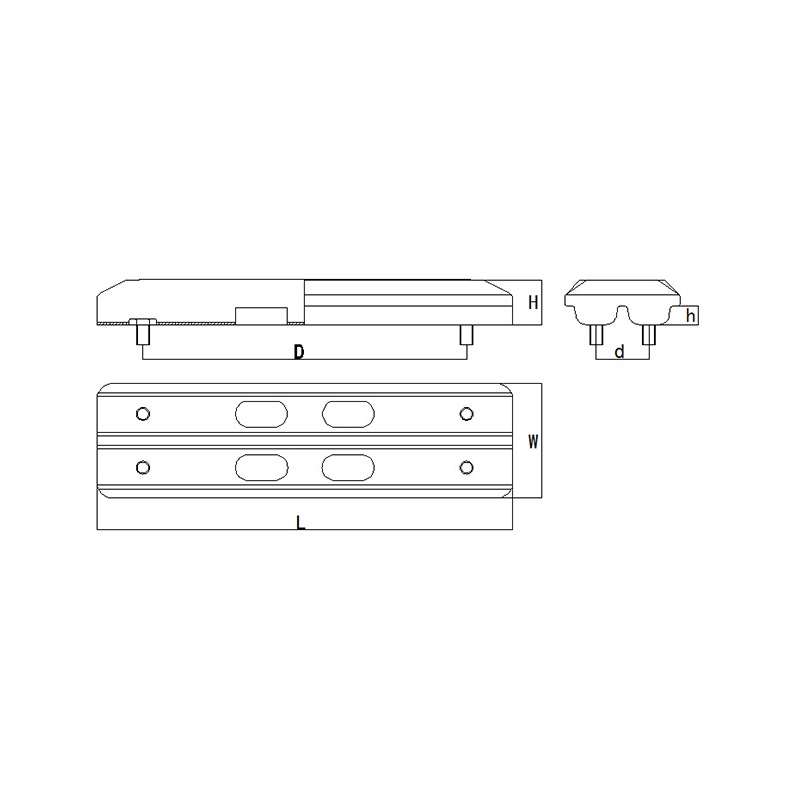
Bolt-on rubber track pads are protective rubber blocks that are fastened directly to the steel track shoes of a tracked machine. Each pad contains an embedded metal frame, and the complete assembly is secured with bolts that pass through pre-drilled holes in both the pad and the shoe. Because the bolts create a rigid mechanical connection, the pad cannot slide, twist, or peel away during operation.
This mounting style is widely used on excavators, compact track loaders, and other heavy equipment that works on paved surfaces, asphalt, and finished concrete. The rubber layer sits between the steel track and the ground, absorbing impact and protecting the undercarriage from wear. At the same time, the tread pattern on the pad surface provides the traction needed to maneuver on hard, slippery surfaces.
 300BA Bolt-On Rubber Track Pads for ExcavatorsThese bolt-on pads use tough rubber over a reinforced steel frame to protect paved surfaces while providing traction. Their low-noise design suits urban and residential construction sites.View Product →
For most excavator applications, a durable bolt-on pad such as our 300BA model is the standard choice. It combines a tough rubber compound with a reinforced metal frame to deliver reliable performance in daily digging, grading, and demolition work.
Why Choose Bolt-On Track Pads?
Bolt-on track pads offer a combination of security, durability, and serviceability that other mounting styles struggle to match. Here are the main reasons machine owners select them:
- Maximum holding strength. Bolted fastening keeps the pad locked to the track shoe, even under high torque during digging and turning.
- Long service life. The dense rubber formulation resists cutting, tearing, and abrasion on rough ground.
- Individual replacement. A damaged pad can be unbolted and replaced on its own, without removing the entire track assembly.
- Better machine stability. The rigid connection reduces track vibration and noise, which also improves operator comfort.
- Undercarriage protection. The rubber layer reduces wear on track shoes, pins, and bushings, lowering long-term maintenance costs.
No mounting system is perfect, of course. Bolt-on installation takes more time than chain-on or clip-on options because each bolt must be aligned and torqued correctly. In extremely muddy conditions, bolts can also become packed with debris. Still, for machines that spend most of their working hours on hard surfaces, the advantages clearly outweigh these minor inconveniences.
How Bolt-On Rubber Track Pads Are Made
Understanding how a track pad is manufactured helps explain why quality varies so much between suppliers. At our factory in Jiangsu, the process begins with rubber compounding. We mix the raw rubber ourselves in our own mixing center, which allows us to control hardness, resilience, and abrasion resistance for each specific order.
The internal metal frame is produced in our metal stamping workshop and assembled with robotic welding equipment. This ensures that every frame has consistent dimensions and weld strength, which is critical because the frame is what carries the bolt load. After the frames are prepared, they are loaded into large vulcanization molds together with the rubber compound. High pressure and heat cure the rubber and bond it permanently to the metal, creating a single integrated part.
Every finished pad is then inspected in our testing laboratory. We check hardness, dimensional tolerance, and bolt-hole alignment so that the pads mount cleanly on the customer's track shoes. This level of process control is only possible because we handle both the rubber and the metal in-house. For a broader look at pad types and installation considerations, see our ultimate guide to rubber track pads.
Bolt-On vs. Chain-On vs. Clip-On Track Pads
Bolt-on pads are not the only mounting option on the market. Chain-on pads use steel chains that wrap around the entire track, while clip-on pads grip the edge of the track with spring-loaded clips. The table below summarizes the key differences to help you decide which style fits your equipment and working conditions.
| Feature | Bolt-On | Chain-On | Clip-On |
|---|---|---|---|
| Attachment method | Bolts into track shoe | Chains wrap around track | Clips grip track edges |
| Installation speed | Moderate | Fast | Fastest |
| Holding strength | Highest | Moderate | Lower |
| Best surface type | Hard, paved, mixed ground | Soil and compacted dirt | Light-duty and indoor use |
| Typical machines | Excavators, track loaders | Agricultural equipment | Dozers, small machinery |
As the table shows, bolt-on pads are the best choice when you need maximum holding strength and long life on demanding job sites. Chain-on pads work well for agricultural machines that operate in fields, while clip-on pads are suitable for lighter equipment where quick installation matters more than maximum grip.
How to Choose the Right Bolt-On Track Pads
Choosing the correct bolt-on rubber track pads comes down to a few practical checks. Getting these right means the difference between a smooth fit and a costly mismatch. Here is what we tell our customers to look at.
1. Match the Bolt Pattern to Your Track Shoe
The most important specification is the bolt pattern. Count the number of bolt holes, measure the distance between them, and confirm the bolt diameter. Manufacturers use codes such as 400-106-37 or 600-126-70 to identify the shoe pitch and hole spacing. If the code matches your machine's track shoes, the pads will align correctly. Our 400BA model, for example, is built for the 400-106-37 pattern commonly found on medium-sized excavators.
400BA Bolt-On Rubber Track Pads for 400*106*37 PatternBuilt for the 400-106-37 bolt pattern common on medium excavators, these pads offer quiet operation and strong surface protection on asphalt, marble, and epoxy floors, reducing site repair costs.View Product →
2. Choose the Right Rubber Hardness
Softer rubber compounds provide better grip on smooth surfaces and absorb more vibration, but they wear faster. Harder compounds last longer on rocky or abrasive ground but can be noisier. Many manufacturers offer different hardness grades so you can tune the pad to your typical working environment.
3. Consider the Tread Pattern
The tread pattern affects traction and self-cleaning ability. Wide, deep bars are ideal for loose soil and mud, while closer-spaced blocks perform better on hard surfaces. For all-terrain use, a multi-directional tread such as the one on our 500BA pad offers a balanced solution.
500BA All-Terrain Bolt-On Rubber Track PadsWith a multi-directional tread and durable rubber construction, these bolt-on pads deliver balanced traction on loose soil, mud, and hard surfaces. They also protect paved or delicate ground during on-road and off-road work.View Product →
4. Evaluate the Metal Frame Quality
Since the embedded frame carries the bolt load, its thickness and weld quality matter. A robust, continuously welded frame distributes clamping force evenly and prevents the bolt holes from elongating over time. Our frames are produced with robotic welding for consistent quality, and this is one of the details that separates factory-made pads from low-cost imports.
If you are comparing options, you can browse our complete range of bolt-on rubber track pads. Every model lists the track codes it fits, and our team can confirm compatibility based on your machine's shoe measurements.
Final Thoughts
Bolt-on rubber track pads remain the most reliable way to protect your excavator's undercarriage and maintain traction on hard surfaces. Their combination of secure mounting, long service life, and easy individual replacement makes them a smart investment for contractors and machine owners alike.
If you measure your track shoe carefully and match the bolt pattern, rubber hardness, and tread style to your job site, you will get the full benefit of these pads. The right set will last longer, protect your machine better, and keep your project moving without unnecessary downtime.
Whether you operate a single excavator or manage a mixed fleet, we are happy to help you select the right pads. Contact Wangtian with your track shoe measurements, and we will recommend a solution from our bolt-on range.


